
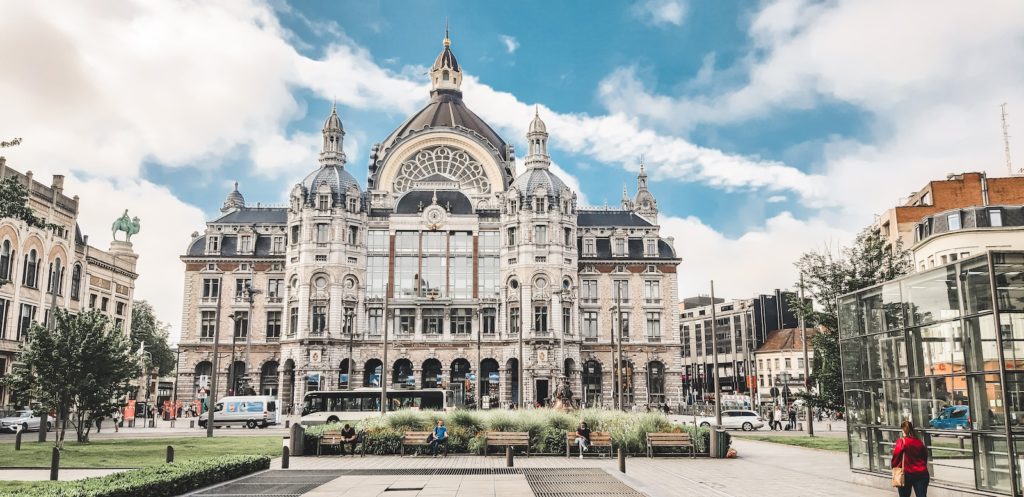
Antwerpen-Centraal opened on 11 August 1905, after ten years of building, to designs by Louis Delacenserie, the city architect of Bruges. Antwerp calls it the spoorwegkathedraal, the railway cathedral, after the dome over its waiting hall; the top of the building stands 75 metres above the street. It went up in the reign of Leopold II, remembered in Belgium as the Builder King.
The station it replaced was a modest affair. Belgium opened the first public railway on the European continent in 1835, between Brussels and Mechelen, and the line reached Antwerp a year later, on 3 June 1836. The first terminus stood outside the city walls, built of wood so that it could be dismantled, or burned, if the city’s defences required it. A second station of wood and iron followed in 1854. In 1886 the city decided on a new line into a terminus in the centre, and Delacenserie had his commission in 1894.
A restorer from Bruges
Delacenserie, born in Bruges in 1838, came to the job as a restorer. He won the Prix de Rome in 1862, travelled through Paris, Italy and Greece on the prize, and spent most of his career restoring medieval Bruges: the Basilica of the Holy Blood in the 1870s, the Gruuthuse in the 1880s and 1890s, the city hall and belfry around the turn of the century. He also designed the post office in Bruges and the Belgian legation in Beijing. For Antwerp he looked back to the city’s 16th-century golden age and to the Pantheon in Rome, and let Art Nouveau into the colours and the materials.
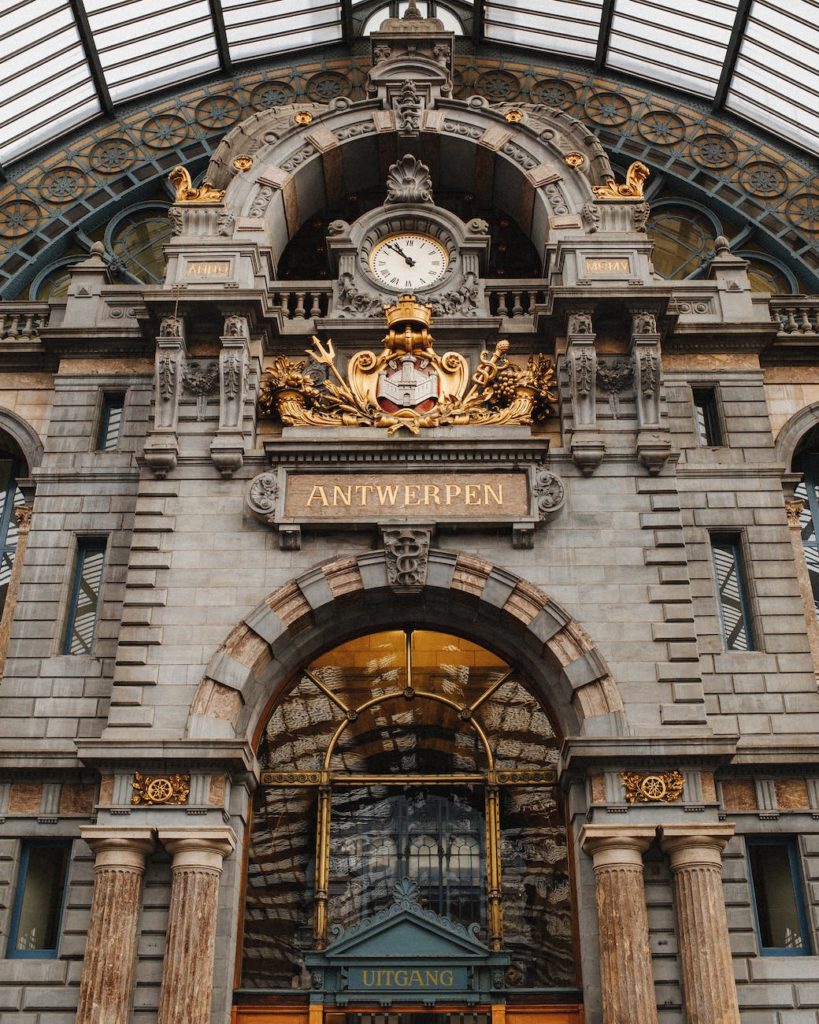
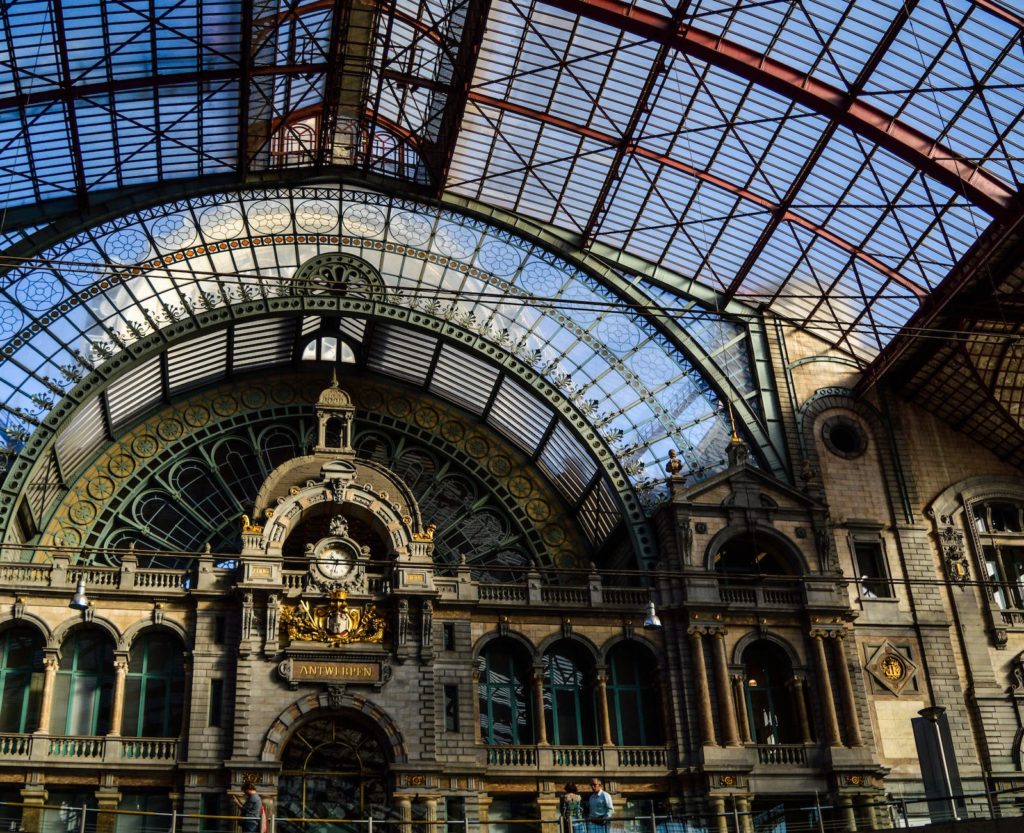
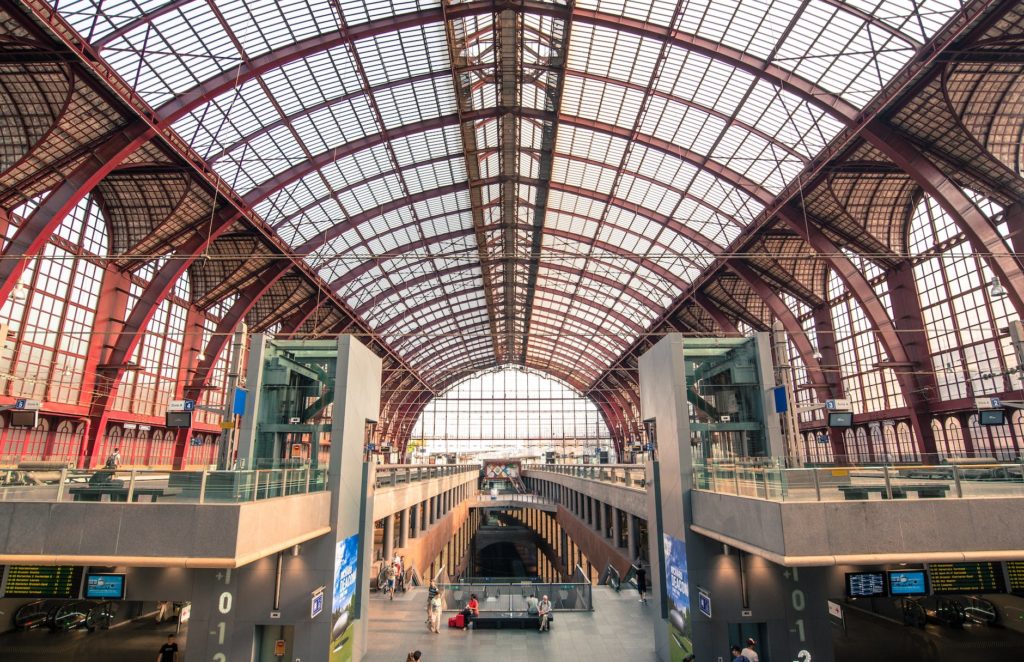
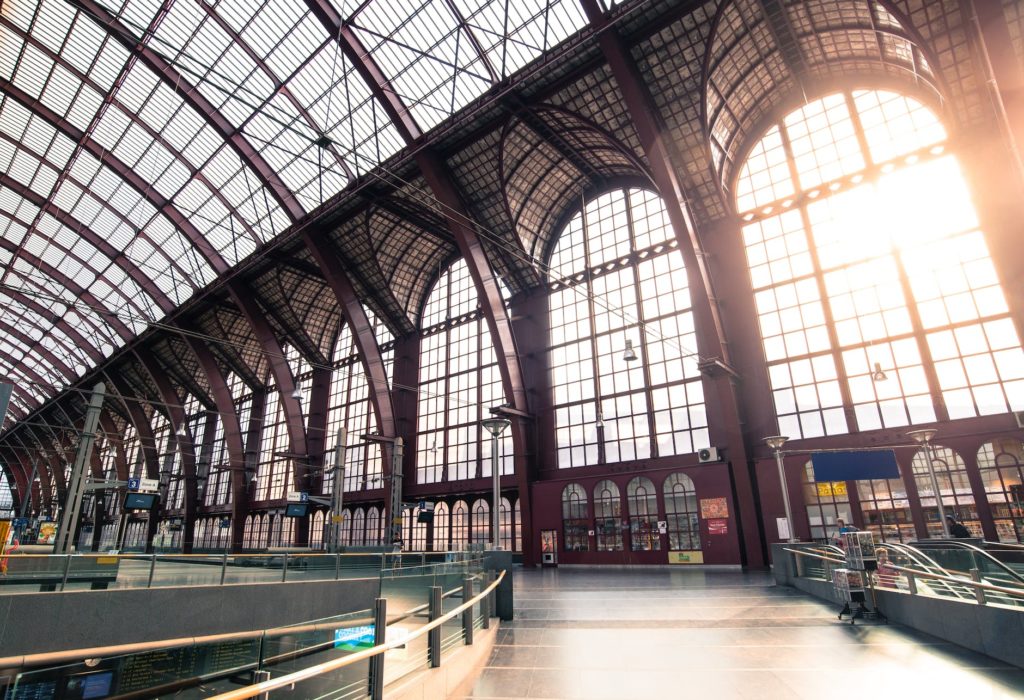
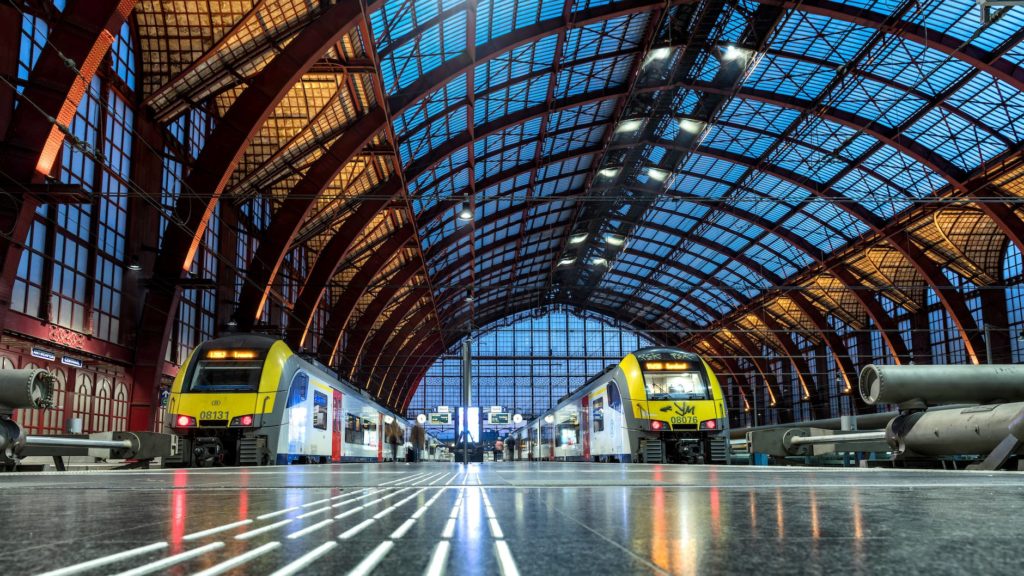
He did not work alone. Jan Van Asperen, an Antwerp architect, designed the viaduct that carries the tracks into the city on a raised bed. The engineer Clément Van Bogaert, later chief engineer of the State Railways, built the train hall behind the stone front: 185 metres long, 44 metres high and 12,000 square metres under riveted steel, tall enough to let the locomotives’ steam rise away from the platforms. The building in front uses more than twenty kinds of stone, several of them marble, with the steel and concrete that hold it up hidden behind the masonry.
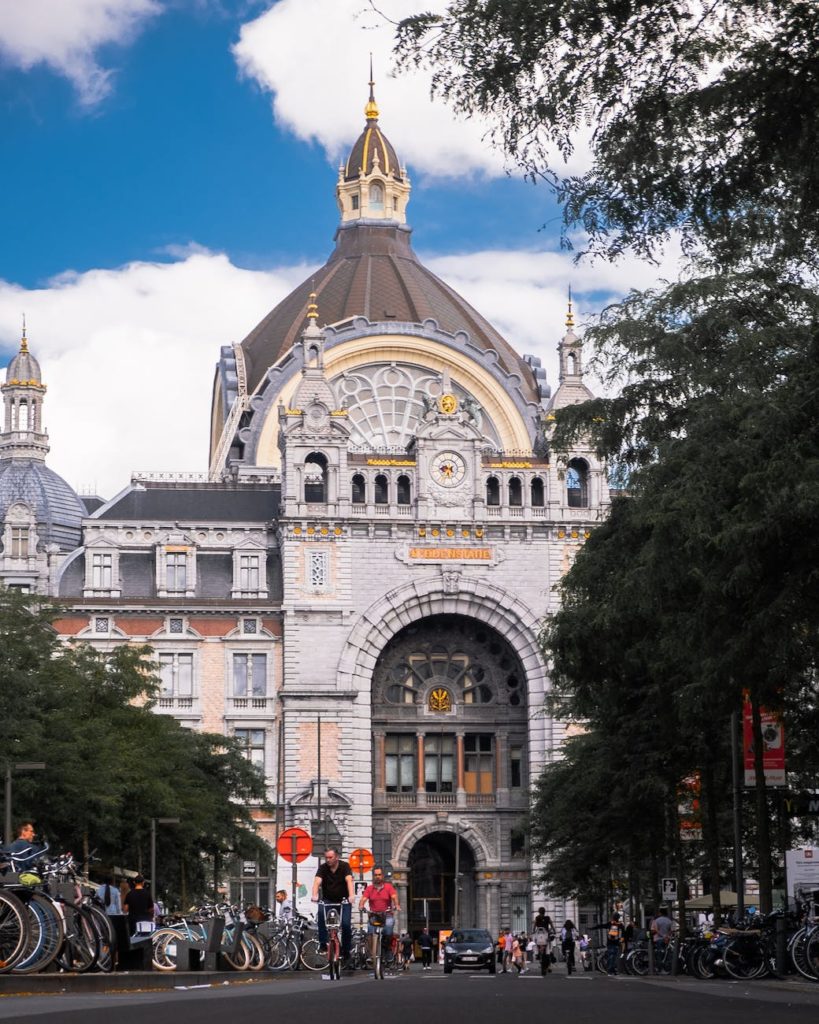
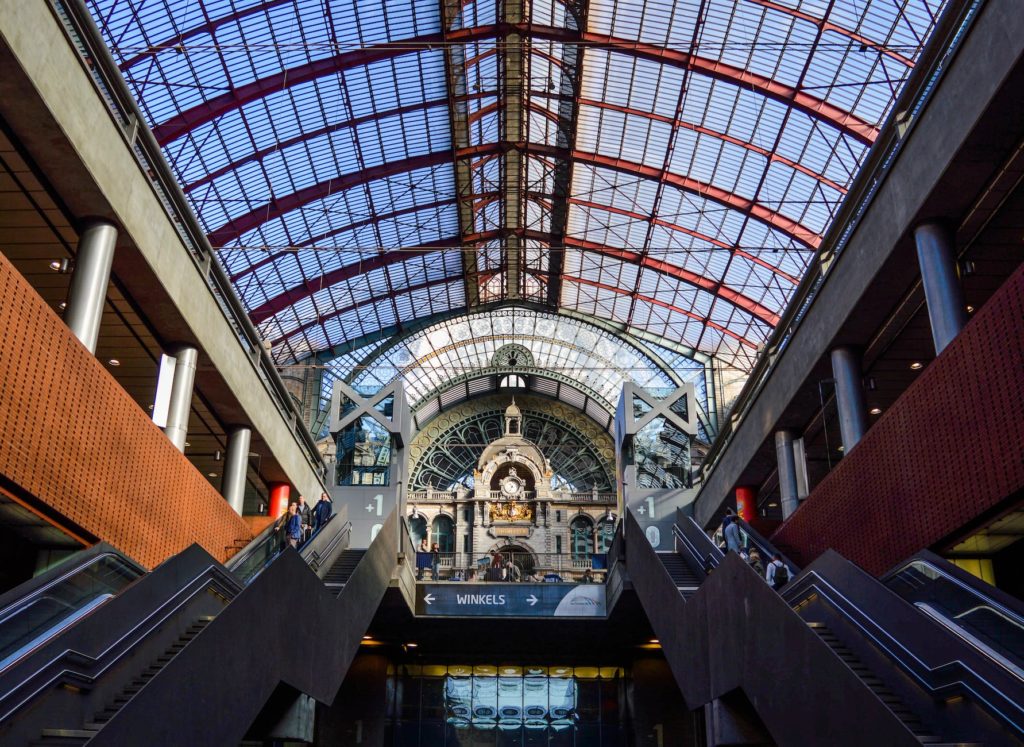
The hall has had a hard century. V-2 rockets hit it during the Second World War, and the bend they left in the roof can still be seen. On 31 January 1986 the station closed for safety reasons. The roof was restored between March and September of that year, with polycarbonate sheets about 40 per cent lighter than the glass they replaced, and the steelwork is now painted burgundy. The six ornamental towers that came off the building in the 1950s went back up only in 2009.
Four levels, one station
The larger change happened underground. From 1873 Antwerp Central was a terminus: trains came in and backed out the way they had arrived, which forced the expresses between Amsterdam and Brussels to reverse. Work began in 1998 on the North-South connection, a line under the city between Berchem and Luchtbal, and the first through trains ran in March 2007. Infrabel, the rail infrastructure company, put the cost at €765 million, of which about 40 per cent went on the station itself.
The station now has four levels. The original high-level platforms, cut from ten tracks to six, stay at the top. Tickets and shops fill street level. Four more terminating tracks sit seven metres down, and four through tracks run 18 metres below the street, all of it arranged around an atrium 26 metres deep. A second entrance came on the Kievitplein side.
Liège made the opposite choice. It demolished its 1958 station and opened a new one by Santiago Calatrava in September 2009, for €312 million. Antwerp dug down instead, and that was the better decision: the 1905 hall still does the job it was built for, as a working terminus, rather than surviving as a facade with the railway moved somewhere else. The railways’ own counts put 37,591 people boarding here on an average weekday in 2023, fifth in Belgium after the three big Brussels stations and Gent-Sint-Pieters. NMBS, the Belgian railway company that runs the station, counted 476,818 travellers a week in 2024.
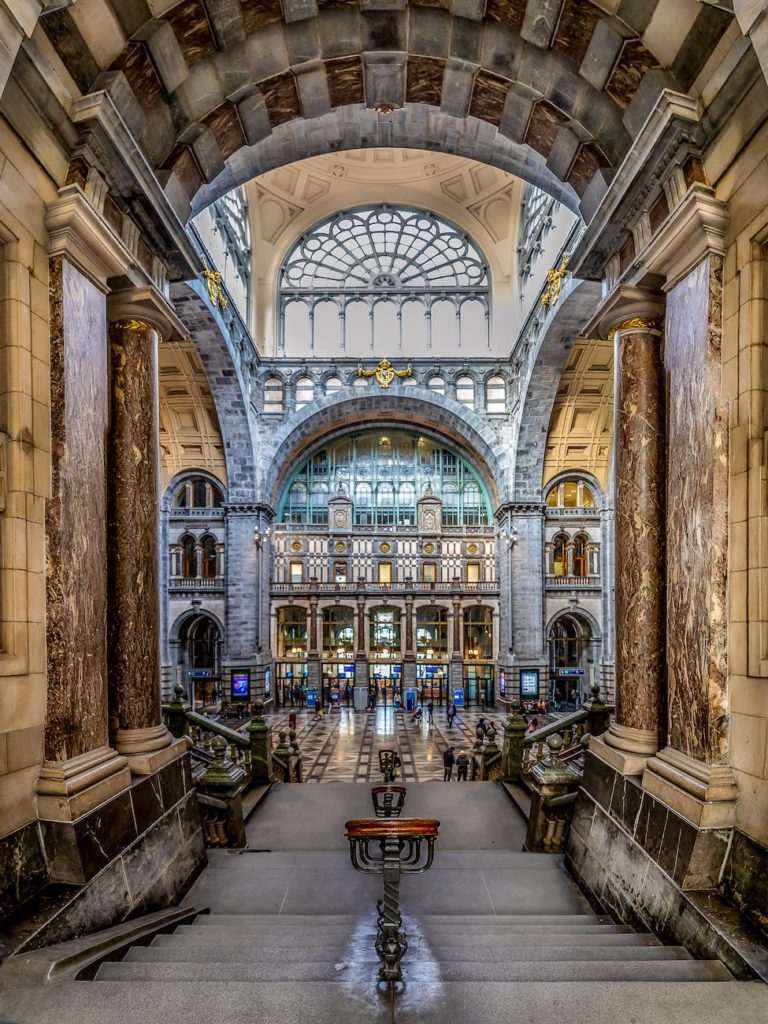
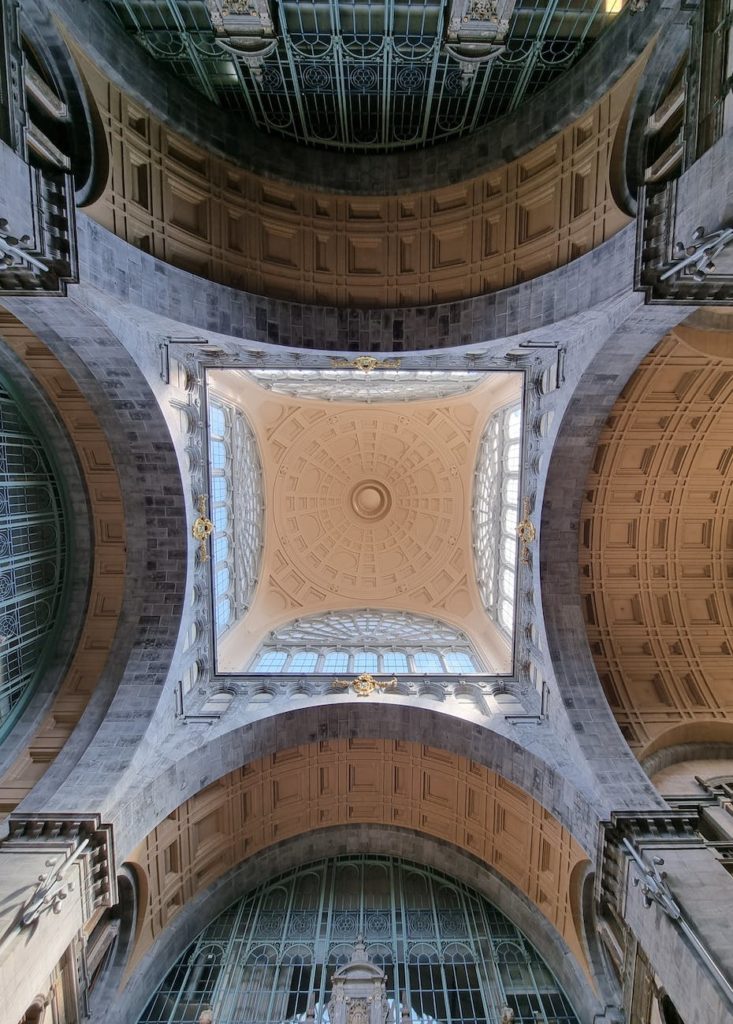
The prizes followed the trains. Newsweek ranked it the world’s fourth greatest station in 2009, the renovation won a Grand Prix at the Europa Nostra awards for cultural heritage in 2011, and Mashable put it first on its list of the most beautiful railway stations in 2014. W. G. Sebald begins his novel Austerlitz here, and in 2009 some 200 dancers turned the hall into a flash mob for a television talent show, a video that went viral. Outside, the neighbours are Antwerp Zoo, which shares the square with the station, and the De Keyserlei, which runs towards the Meir, the city’s main shopping street.
An empty floor and a new train
The station’s newest problem is a space nobody has managed to fill. At the back, in a former Thalys terminal, Comic Station Antwerp opened in 2017; Studio 100 invested €6 million and reopened it as Plopsa Station Antwerp in 2021. It closed on 4 January 2026 for want of visitors. NMBS has since asked for proposals for its 5,878 square metres over several floors, on a concession that could start on 1 January 2027, and has said it wants a use that draws people at different times of day. Koen Kennis, the city’s alderman for mobility, would like passport control there, so that the station could become a full Eurostar terminal for London.
Half of that wish arrives on 14 December 2026. From that date the Eurostar from London to Amsterdam, which until now has run through the tunnel without stopping, calls at Antwerp Central: four trains each weekday, two on Saturdays and three on Sundays, in 2 hours 41 minutes, against three and a half hours with a change at Brussels-South. The stop costs no time, because the trains slow down for the tunnel anyway. The return is another matter. Without border checks in Antwerp, the trains to London will keep passing underneath, 18 metres below the street.
Antwerpen-Centraal
- Address: Koningin Astridplein 27, 2018 Antwerp
- Opened: 11 August 1905; through station since March 2007
- Who runs it: NMBS, the Belgian national railway company; tracks by Infrabel
- Size: train hall 185 metres long and 44 metres high; four levels, 14 tracks
- Price: free to walk in; Eurostar from London stops here from 14 December 2026
- Getting there: it is the station; premetro stop Diamant is underneath
- Why it works: the railways dug down instead of moving out
